Why Fiber Matters
Rethinking the Materials in Our Homes
When we shop for everyday household items, what usually comes to mind first? The color? The texture? Maybe durability or how well the item will perform.
But there’s another question worth asking: what happens to the materials we use after they wear out?
Many of the textiles we interact with daily eventually break down through washing, friction, and disposal. The type of fiber used in those products determines not only how they perform in your home, but also how they return to the environment when their life cycle ends.
Understanding the difference between fiber types can help us make more thoughtful choices about the materials we bring into our homes.
The Three Main Types of Fibers
Most household textiles are made from one of three categories of fibers: natural, synthetic, or semi-synthetic.
Natural Fibers
Natural fibers come directly from plants or animals and require minimal processing to become usable textiles. Examples include cotton, linen, hemp, wool, and silk.
These materials are valued for their breathability, durability, and ability to naturally decompose over time.

Synthetic Fibers
Synthetic fibers are entirely man-made, created through chemical processes using petroleum-based materials. Common examples include polyester, acrylic, and nylon.
These fibers are widely used because they are inexpensive, lightweight, and easy to mass produce. However, they are not biodegradable and can release microplastics as they wear down during washing and everyday use.

Semi-Synthetic Fibers
Semi-synthetic fibers begin with a natural base material, usually plant cellulose, but are chemically processed to transform them into a more workable textile.
Examples include rayon, viscose, and modal. These fibers sit somewhere between natural and synthetic materials in both performance and environmental impact.

The Difference Is in the Details
Quality & Performance
Natural fibers such as linen, hemp, and wool are known for their durability and longevity, especially when properly cared for.
Other natural fibers, including cotton and silk, are softer and lighter while still maintaining strength. Many natural fibers contain tiny gaps within their structure, allowing airflow and moisture absorption, which makes them ideal for household textiles.
Because these fibers originate from natural sources, they can also break down naturally in soil over time, returning to the earth without leaving behind synthetic residue.

What I Learned as a Maker
When I first started crocheting, I chose the most accessible option available: acrylic yarn. Nearly everything I made was acrylic. It was affordable and easy to find, but over time I began noticing its limitations.
The items didn’t perform the way a long-lasting household textile should.
Eventually I began working primarily with cotton, and the difference was immediately noticeable.
Cotton fibers hold their shape far better than acrylic. While acrylic yarn can feel soft at first, it tends to become brittle, pill, tangle, and lose its structure after repeated use.
Longevity Matters
Synthetic fibers are often marketed as long-lasting, but longevity doesn’t always mean lasting performance.
Think about how often common household textiles need replacing—dishcloths, washcloths, towels, or cleaning rags. Many synthetic items wear out quickly despite being technically non-degradable.
Natural fibers, when well made and properly cared for, are designed to last for years rather than months.
One of the most beautiful qualities of natural materials is that they age alongside us. Instead of simply degrading, they soften, adapt, and develop character with time and use.
Quick Guide to Common Natural Fibers
Here are some of the most common natural fibers used in handmade textiles and household goods.
Cotton
Cotton is one of the most widely used natural fibers in the world. It is soft, breathable, absorbent, and durable, making it especially well-suited for items like dishcloths, washcloths, and everyday household textiles.

(Alabama Cooperative Extension System)
Linen
Linen is made from the fibers of the flax plant. It is known for its strength, breathability, and crisp texture, and it becomes softer over time with use and washing.

Hemp
Hemp is an incredibly strong and sustainable fiber. It grows quickly with minimal resources and produces a durable textile that softens naturally with wear.

Wool
Wool comes from animal fibers, most commonly sheep. It is valued for its insulating properties, elasticity, and warmth, making it ideal for garments and colder-weather accessories.

Silk
Silk is a natural protein fiber known for its smooth texture and natural sheen. While delicate in appearance, silk is surprisingly strong and lightweight.

(Photo of Kraig Biocraft Laboratories, Inc.)
Why I Choose Natural Fibers
When creating handmade items, the materials matter just as much as the craftsmanship.
Natural fibers offer a balance of function, durability, and environmental mindfulness that aligns with the values behind my work. They perform well in everyday life while also respecting the natural cycles of the materials themselves.
Whenever possible, I choose fibers that are practical for the home, comfortable to use, and capable of lasting through years of daily routines.
Handmade items are meant to become part of the small rituals of everyday life, used often, cared for well, and appreciated over time.
Natural vs. Synthetic Fibers at a Glance
| Feature | Natural Fibers | Synthetic Fibers |
|---|---|---|
| Source | Derived from plants or animals (cotton, linen, wool, hemp) | Man-made from petroleum-based chemicals |
| Breathability | Naturally breathable and moisture-absorbing | Less breathable and may trap heat or moisture |
| Durability | Strong and long-lasting when properly cared for | Can weaken, pill, or lose structure with repeated use |
| Environmental Impact | Biodegradable and able to return to the earth over time | Non-biodegradable and can contribute to microplastic pollution |
| Aging Over Time | Softens and develops character with use | Often becomes brittle, misshapen, or worn |
| End of Life | Naturally decomposes in soil | Remains in landfills or breaks down into microplastics |
Natural and synthetic fibers both have their place in the textile world, but understanding their differences helps us make more thoughtful decisions about the items we bring into our homes and use every day.
Continue Learning
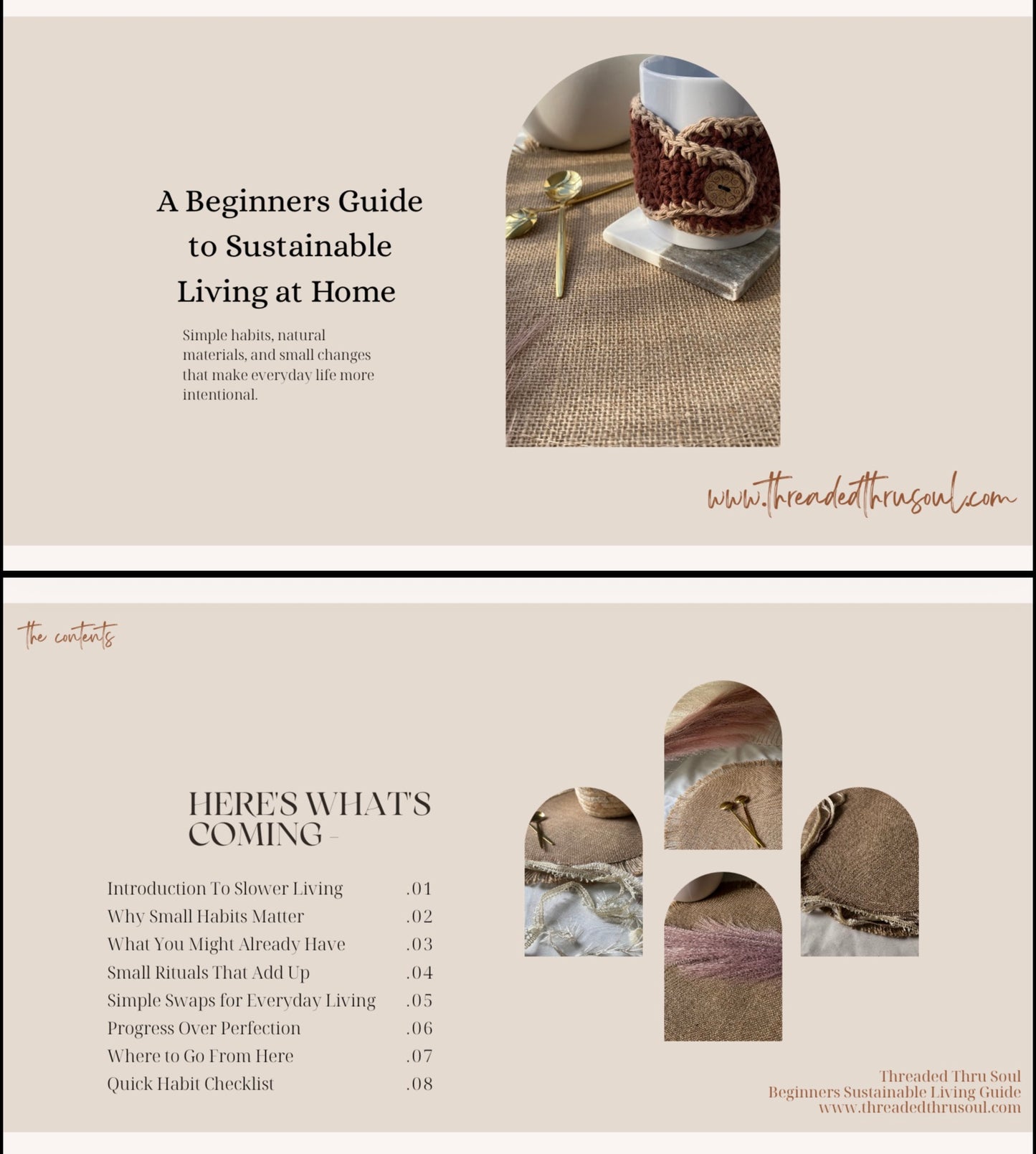
If you’re interested in bringing more natural and sustainable materials into your home, I’ve created a free Home Sustainability Guide that explores simple ways to make thoughtful choices with everyday household items!
Inside the guide you’ll find:
• Practical swaps for common household textiles
• Tips for caring for natural fiber products
• Simple ways to reduce synthetic waste at home
• A beginner-friendly introduction to sustainable materials
You can download the guide below and explore it at your own pace.
Thank you for exploring this guide!
— Threaded Thru Soul